Thank you for following HEDIMED!

HEDIMED project has come to an end

After a long journey that started in 2020, the HEDIMED project has now officially concluded. Along the way we have gained valuable new insights into the links between the exposome and immune-mediated diseases – with more still to come in the form of collaboration and upcoming publications!

We warmly thank all our followers and collaborators for being part of this journey!

The HEDIMED website will remain open five years, and we aim to advertise our publications on our remaining LinkedIn page regularly.

In addition, The EHEN network website will remain open for five years. Make sure to get familiar with the great collection of tools from each project! If you want to keep track of the broader exposome research, we encourage you to follow the IHEN network.

Wishing you a refreshing autumn!

Best regards,

HEDIMED Admin Team

Should you have any inquiries regarding HEDIMED, please contact us by using our Contact form or admin team’s personal emails.


Similar Posts

  • HEDIMED in horizon magazine

    HEDIMED was featured in the European Commission’s Horizon Research & Innovation Magazine. Read the article “The hunt for clues to immune-system disorders” on how HEDIMED is taking approaches to understanding a growing group of illnesses in a bid for more effective treatments. https://projects.research-and-innovation.ec.europa.eu/en/horizon-magazine/hunt-clues-immune-system-disorders

  • Faecal volatilomics in exposome research

    Novel Technologies used in HEDIMED Volatile organic compounds (VOCs) are substances that readily evaporate in our ordinary living environment. This means that they have a high vapour pressure at room temperature and low boiling point, which facilitates their volatility and makes them responsible for odours and smells. VOCs are a diverse group of compounds derived…

  • Exposome Expectations in child Health – a workshop

    A workshop on ‘Exposome expectations in child health’ was held on 16th-20th October in Leiden, Netherlands. This was an intensive and interactive event for slightly over 20 people from multiple sectors of exposome research. Wide-ranging expertise was gathered! HEDIMED took advantage of being involved in this transdisciplinary, important, and future-oriented work. The exposome research on…

  • Satellite data and health research

    Research on environmental health is increasingly using satellite data. In addition to studying environmental and climatic changes on Earth, satellite observations have recently been used to track and forecast health consequences and disease outbreaks as well. Satellites broadcast information, for instance, on the level of urban development, air pollution, vegetation, and water quality. Geospatial data…

  • HEDIMED @ EASD2024

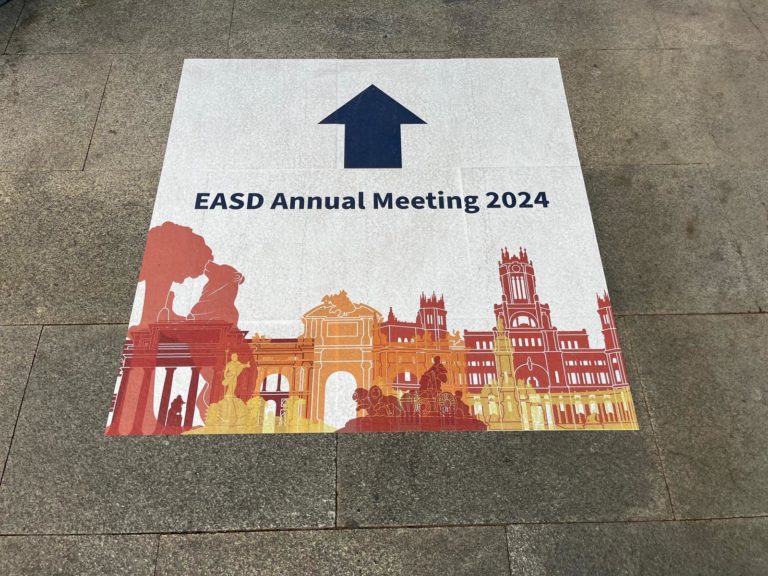
    A quick throwback into EASD2024, held in Madrid in 9th-13th September: This year, EASD brought together a large and engaged audience of more than 12,000 people, with particular interest in Type 1 Diabetes. The event, designed to bridge the gap between scientific discoveries and public health, featured key presentations and discussions about the disease. HEDIMED…

  • EHEN final meeting

    From November 26th to 28th, the EHEN (European Human Exposome Network) final meeting took place in Brussels, bringing together researchers, stakeholders, and policymakers to discuss the network’s achievements and future directions. The event was divided into two-day scientific meeting followed by a one day stakeholder event, each packed with inspiring presentations and lively discussions. Two…